 Home
Home
Espacio Azulejo
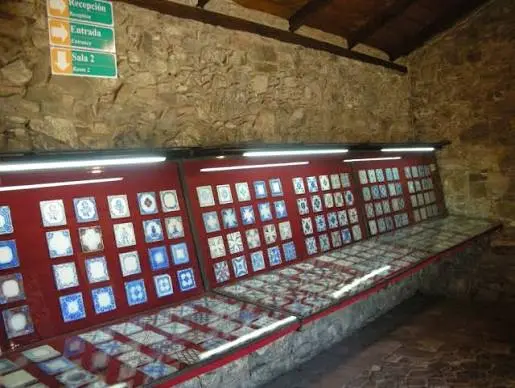
We are arriving at Espacio del Azulejo, at Paseo de San Gabriel 104, although closed, I invite you to imagine its route. This place, a Portuguese building from the 18th century, recovered and partially reconstructed, preserves typical features such as the gable roof, stone walls and a central brace. The incorporation of tiles into River Plate architecture occurred mainly in the 19th century, a period after the Portuguese colony. It was a primary element for architectural decoration, both in religious and civil buildings. At first, it was a constructive resource for waterproofing, such as in church domes and cistern interiors, before being extended to hallways, patios and kitchens. Most of the examples you will see are related to the typical French “Pais de Calais” tile, coming from Desvres. The importation of these tiles began in 1840 and ended at the end of the 19th century. Many were recycled and reused. The Azulejo Space has three consecutive rooms in an “L” shape, with a reception room and two exhibition areas. The exhibition concentrates a collection of tiles mostly from Pays de Calais, with a standard format of 4 inches or 11 cm on a side. These tiles have a white background made of tin oxide (tin) and use cobalt blue, with geometric designs that use points, lines and quotes.…
Open in the map